
Epoxy Grout vs Traditional Grout - What’s the Difference?
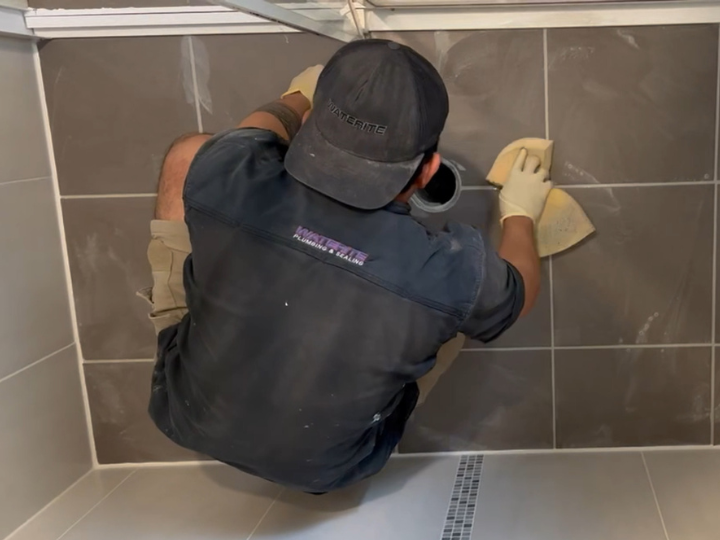
When people think about leaking showers, mould, or stained grout, they usually focus on the tiles themselves.
But in reality, the grout lines and silicone are often where the real problems begin.
Over time, moisture works its way into porous grout, deteriorated silicone, and small gaps around the shower. That’s when issues like mould, discolouration, cracking, and leaking showers start becoming more noticeable.
Why Traditional Cement Grout Causes Problems Over Time
Traditional cement grout has been used in bathrooms for years, but it comes with one major downside – it’s porous.
That means it naturally absorbs moisture over time.
In wet areas like showers, this can eventually lead to:
- Mould and bacteria buildup
- Staining and discolouration
- Cracking and deterioration
- Moisture trapped behind tiles
- Water leaking into surrounding areas
Once water starts getting behind tiles, the damage often spreads quietly through wall cavities and surrounding structures before visible signs appear.
How Epoxy Grout Is Different
Epoxy grout is designed very differently from traditional cement grout.
Unlike regular grout, epoxy grout is non-porous and highly resistant to moisture, staining, bacteria, and everyday wear. Because it absorbs far less moisture, it performs much better in constantly wet environments like showers and bathrooms.
That’s why epoxy grout is becoming a more popular long-term option for homeowners wanting a cleaner, lower-maintenance shower refresh.
The Benefits of Epoxy Grout
Some of the biggest advantages of epoxy grout include:
- Easier to keep clean over time
- Better suited to constantly wet areas
- Longer-lasting than traditional grout
- More resistant to everyday wear
- Lower ongoing maintenance
For many homeowners, the biggest difference is how much easier epoxy grout is to maintain over time compared to traditional grout.
Why Shower Sealing Still Matters
Even with epoxy grout, showers still rely on proper sealing to keep moisture contained over time.
As showers age, silicone can begin deteriorating around corners, edges, and fittings – especially in constantly wet areas. Once those sealed areas start breaking down, water can slowly work its way behind tiles and into surrounding surfaces.
Some common signs a shower may need resealing include:
- Peeling or mouldy silicone
- Persistent mould that keeps returning
- Loose, cracked or drummy tiles
- Damp spots or moisture outside the shower
Can Leaking Showers Be Fixed Without Removing Tiles?
In many cases, yes.
Professional shower regrouting and resealing can often repair leaking showers without removing tiles or renovating the entire bathroom.
Depending on the condition of the shower, the process may involve removing failed grout and silicone, applying epoxy grout, and resealing areas such as the joints and corners where moisture is getting through.
The earlier these issues are identified, the easier they are to repair before more significant water damage develops underneath.
Shower Sealing and Epoxy Regrouting Services
Waterite Plumbing & Sealing provides professional shower sealing, epoxy regrouting, silicone replacement, and leaking shower repairs with our experienced in-house team of tilers.
We offer free inspections, free quotes, $0 call-out fees, and extensive warranties for long-term peace of mind.